Door Closer Repair & Installation Washington DC
Is your door closer leaking oil, letting the door slam, or leaving it short of latching? A failing closer is one of the most common reasons a commercial door stops locking, even when the lock itself is fine.
DC Locks & Doors adjusts, repairs, and installs door closers for offices, retail stores, and commercial buildings throughout Washington, DC. Many closers just need adjustment; we'll tell you when a replacement is the better fix.
Need Door Closer Service?
Call (202) 919-5727 or request door closer service online. Open daily, 7 AM–11 PM.
Common Door Closer Problems
Door closers fail in a few predictable ways, and most of them are fixable without a full replacement:
- Closer leaking fluid or visibly damaged
- Door closes too fast and slams
- Door won't fully close or latch on its own
- Door closes too slowly or drifts open
- Closer arm loose, disconnected, or misaligned
Adjust, Repair, or Replace?
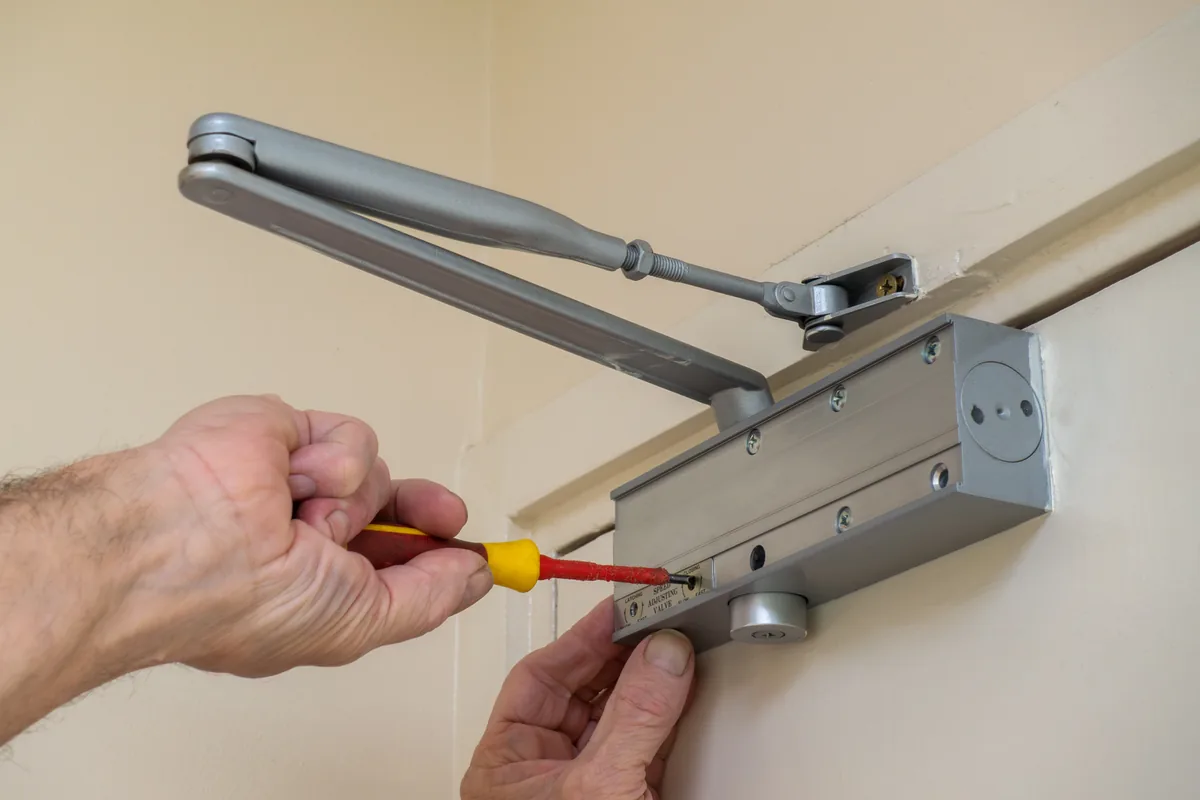
Most closer problems start with adjustment. Closers have separate valves for closing speed, latch speed, and often backcheck, and setting these correctly often stops slamming or drifting without new parts.
Repair makes sense for a loose arm, worn arm parts, or damaged mounting. Replacement is usually needed when the closer leaks fluid, the body is cracked, or it won't hold an adjustment. A new closer is sized to the door's width, weight, and traffic.
Why a Bad Closer Stops a Door From Locking
If a door doesn't fully close, the latch can't engage the strike, so it looks like a lock problem. That's why we check the closer on lock and door repair calls. Fire-rated doors also need to close and latch on their own, so a working closer matters there too.
Door Closer Types We Service
Where the closer is mounted affects how it is adjusted and what a replacement involves:
- Surface-mounted closers — the most common type, mounted on the door or frame with a visible arm
- Concealed overhead closers — hidden in the head of the frame, common on aluminum storefronts
- Floor closers — set in the floor under the door, common on heavy glass entrances
What Happens During the Appointment
We open the door fully and watch how it closes, looking for slamming, drifting, or stopping short, along with leaks or loose mounting. We also check the hinges and frame, since a sagging door can mimic a closer problem.
We explain the options and price, then adjust, repair, or replace the closer. We finish by testing that the door closes fully and latches every time.
What Affects the Cost
Door closer pricing depends mainly on:
- Closer type: surface, concealed overhead, or floor
- Adjustment only, repair, or full replacement
- Door size, weight, and traffic
- Arm type and any hold-open or delayed-action features
- Whether the door, hinges, or frame also need work
What to Send Us Before the Visit
These details help us bring the right closer or parts:
- Building address and which door needs service
- A photo of the closer and arm, including any brand label
- A photo of the full door, and a short video of it closing
- Whether the door is glass, aluminum, steel, or wood, and if it is fire-rated
- What it is doing: slamming, drifting, leaking, or not latching
Door Closer Brands We Work On
We service closers common in Washington, DC commercial buildings, including LCN, Norton, Rixson, dormakaba, and International Door Closers, from heavy-duty surface closers on busy storefronts to Rixson floor closers under glass entrances.
If the closer is only part of the problem, our commercial door repair service covers hinges and frames. For exit hardware, see panic bar repair.
Frequently Asked Questions
Q: Why does my commercial door slam shut?
Q: Why won't my door fully close or latch?
Q: Can a door closer be adjusted instead of replaced?
Q: How do I know if my door closer needs to be replaced?
Q: Do you work on concealed and floor closers?
Q: Can a bad door closer stop a lock from working?
Need Door Closer Repair in Washington, DC?
Call DC Locks & Doors at (202) 919-5727. Open daily, 7 AM–11 PM.